
#7831. [ICPC 2025 APC] Can You Reach There?

[ICPC 2025 APC] Can You Reach There?
[ICPC 2025 APC] Can You Reach There?
题目描述
You are given $n$ distinct marked points on a 2D plane, numbered from $1$ to $n$. Marked point $i$ has coordinates $(x_i, y_i)$. In this problem, you are given $q$ scenarios, numbered from $1$ to $q$. In each scenario $k$, four integers $a_k$, $b_k$, $c_k$, and $d_k$ are given, indicating that you initially stand at $(a_k, b_k)$ and aim to reach $(c_k, d_k)$ by repeating the steps described below any number of times.In a single step, you choose two marked points and , which may be identical. Let denote the point where you are currently standing, and define a point by
In other words, is chosen so that the vector from to has the same direction and length as the vector from to . You may then move to any point on the segment , including the point itself, and you will stand at that new point.
For each scenario, determine whether the objective can be achieved using the described steps. Note that all scenarios are independent of each other.
输入格式
The first line of input contains two integers $n$ and $q$ ($1 \leq n \leq 100\,000$, $1 \leq q \leq 100\,000$). The $i$-th of the next $n$ lines contains two integers $x_i$ and $y_i$ ($0 \leq x_i, y_i \leq 10^9$). The input guarantees that no two marked points have the same coordinates.The next lines represent the scenarios. The -th of these lines contains four integers , , , and (; ).
输出格式
Output $q$ lines. The $k$-th line should contain **yes** if the objective of scenario $k$ is achievable, or **no** otherwise.2 4
10 0
0 10
3 4 6 5
4 0 7 0
4 0 16 0
123 456 789 0yes
yes
yes
no提示
**Explanation for the sample input/output #1**There are two marked points and . In scenario 1, starting from the point , the objective is achieved as follows:
- In the first step, choose as and as . A point is determined with coordinates . Move to a point , which lies on the segment . (Figure M.1 (a))
- In the next step, choose as both and . A point is determined with coordinates . From there, you can reach the point . (Figure M.1 (b))
In scenario 2, you start from . Choose as both and . A point is determined with coordinates . The point is on the segment , allowing you to reach there in a single step. (Figure M.1 (c))
In scenario 3, the objective is similarly achievable.
In scenario 4, it can be shown that reaching the point from is impossible.
:::align{center}
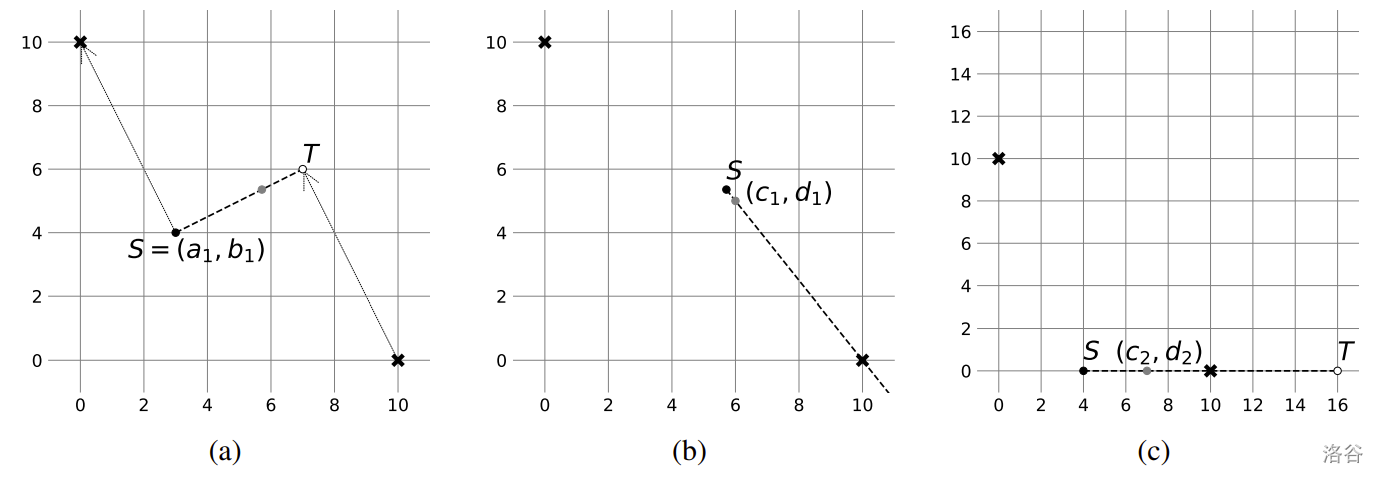
Figure M.1: Illustrations of the scenarios in Sample Input #1. ::: 标签: P15504|2025|ICPC